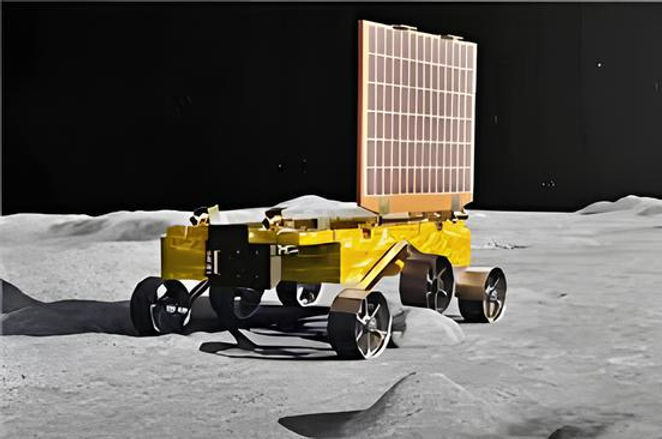
The Science of Chandrayaan 3: Unlocking Lunar Secrets
Chandrayaan 3 represents a remarkable scientific endeavor aimed at unraveling the mysteries of the Moon, enhancing our comprehension of this enigmatic celestial body. The scientific goals of Chandrayaan 3 encompass a multi-faceted approach to lunar exploration. One primary objective is to study the Moon's surface composition comprehensively, analyzing its minerals and elements. This includes an in-depth examination of potential resources such as water and Helium-3. Another critical goal is to understand the lunar exosphere and its characteristics, including its composition and variations, shedding light on the Moon's interaction with the solar wind.
To achieve these objectives, Chandrayaan 3 is equipped with a suite of scientific instruments and experiments. Advanced spectrometers are incorporated to analyze the Moon's surface, providing valuable data on its composition. Additionally, neutron detectors are deployed to detect and map the presence of water molecules and other volatile compounds. Seismometers are utilized to study lunar seismic activities, offering insights into the Moon's internal structure and subsurface composition. Furthermore, imaging cameras and high-resolution microimagers play a vital role in lunar topography mapping and capturing high-detail images of the lunar surface.
The data collected from these experiments will not only contribute to a deeper understanding of the Moon but also provide vital information for future lunar missions. Chandrayaan 3, through its scientific endeavors, seeks to facilitate not only national but also global advancements in lunar research and exploration. The mission aims to be a cornerstone in humanity's quest to unlock the lunar secrets, shaping the trajectory of space exploration and potentially paving the way for human settlement beyond our home planet.
Chandrayaan 3 also places a strong emphasis on studying the Moon's geology and geophysics. This includes investigations into the Moon's crustal structure, understanding the presence of various geological features such as craters, basins, and lava plains. By studying the geological history of the Moon, scientists aim to reconstruct its evolution over billions of years and shed light on the processes that have shaped its current state.
One vital aspect of the mission is understanding the Moon's radiation environment. Instruments on board Chandrayaan 3 are designed to measure and analyze the radiation levels on the lunar surface. This is critical for assessing the potential risks and challenges that future human missions may face, ensuring the safety and well-being of astronauts.
Additionally, Chandrayaan 3's scientific goals encompass studying the Moon's magnetic field. By understanding the magnetization of the lunar surface and subsurface, scientists can gain valuable insights into the Moon's core and its thermal history. This information is crucial in comprehending the Moon's past magnetic activity and its implications for lunar evolution.
The data collected through these scientific experiments during the Chandrayaan 3 mission is anticipated to contribute significantly to lunar science, not only advancing our understanding of the Moon but also enhancing our knowledge of other planetary bodies in our solar system and beyond. Chandrayaan 3 endeavors to unlock lunar secrets, enriching our scientific comprehension of the Moon and paving the way for future space exploration endeavors, including potential human missions to our celestial neighbor.